
Here are 5 quick signs you can look for right now to see if you local business is missing out on revenue.
Key Points
- How often does your business show up when people search?
- Aim for a meaningful portion of your website visitors coming from organic search (roughly 40–60%). Low organic traffic means you’re not consistently attracting customers actively searching topics related to your business.
- Are you attracting the right customers to your website?
- Look at your traffic value (how much it would cost to pay for that traffic). Higher value usually means your website is attracting people closer to making a buying decision.
- Are your website visitors generating revenue for your business?
- Watch how traffic and revenue move together. If traffic is increasing but revenue isn’t, you’re likely attracting the wrong audience. When both grow together, you’re reaching people ready to buy.
- Are new customers turning into repeat customers?
- Track your direct traffic over time. If more people are coming back to your site as discovery traffic grows, it means your marketing is working as a system – bringing people in, and keeping them engaged.
- Is your average order value increasing?
- If orders are going up but revenue isn’t, customers are spending less per transaction. This is an opportunity to increase revenue by improving how you package, price, and present your products or services.
What to Look For
How well are you attracting new customers?
The cost of not attracting your target customers compounds. The opportunity cost of not getting a customer who is looking for a business that matches your description is the initial sale, and the lifetime value of a potential repeat customer.
It also gradually increases your local competitors’ market share, which is another compounding system. Each new customer competitors get opens the door for more repeat purchases, more reviews, and more word-of-mouth.
A quick way to tell if you’re leaving revenue on the table is by how well you’re utilizing your marketing channels. If less than 50% of your website traffic is coming from organic search, you’re likely not attracting the demand that already exists for your products/services.
A 2019 study from BrightEdge showed that 53% of website traffic comes from organic search, vastly exceeding other channels like social, display ads, and paid search.
That doesn’t mean you need to hit that number exactly, but it gives you a baseline. If your organic traffic is a small percentage of your overall traffic, it usually means your brand’s not positioned in a way that captures people who are actively searching. This signal gives you an idea of how consistently new customers can find you.
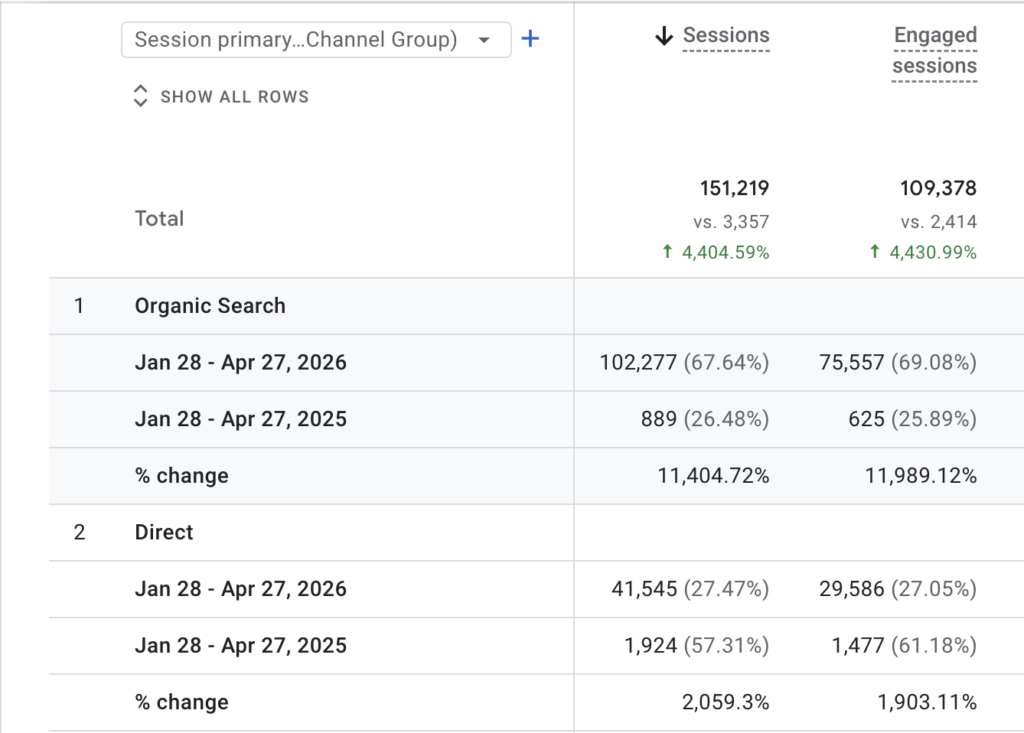
The example above shows the year-over-year shift for one local business. Last year, organic traffic made up 26% of engaged website visits. This year, it’s 69%.
They went from relying mostly on direct traffic to having the majority of their visitors come through discovery.
Are you targeting the right customers?
Even if over 50% of your traffic is coming from organic search, the next question is: are you attracting the right customers?
Here’s a quick way to tell how valuable that traffic is to your business.
Look at traffic cost.

This metric gives you a rough idea of how much you’d have to spend on paid ads to get the same traffic you’re currently getting organically.
It’s based on the cost-per-click (CPC) of the keywords your site shows up for in search results.
Keywords are just the phrases people type into Google when they’re looking for something.
Phrases people search when they’re comparing options or looking for a place to buy tend to have higher CPCs.
So when your estimated traffic value is strong, it usually means your website is attracting people who they’re actively looking for a business that matches what you offer.
That’s the type of traffic that’s easier to convert into customers.
Another quick check is to look beyond your brand name.

If most of your traffic is coming from people already searching for your business directly, that’s a good sign of awareness. But it doesn’t tell you how often you’re showing up when new customers are actively deciding where to buy.
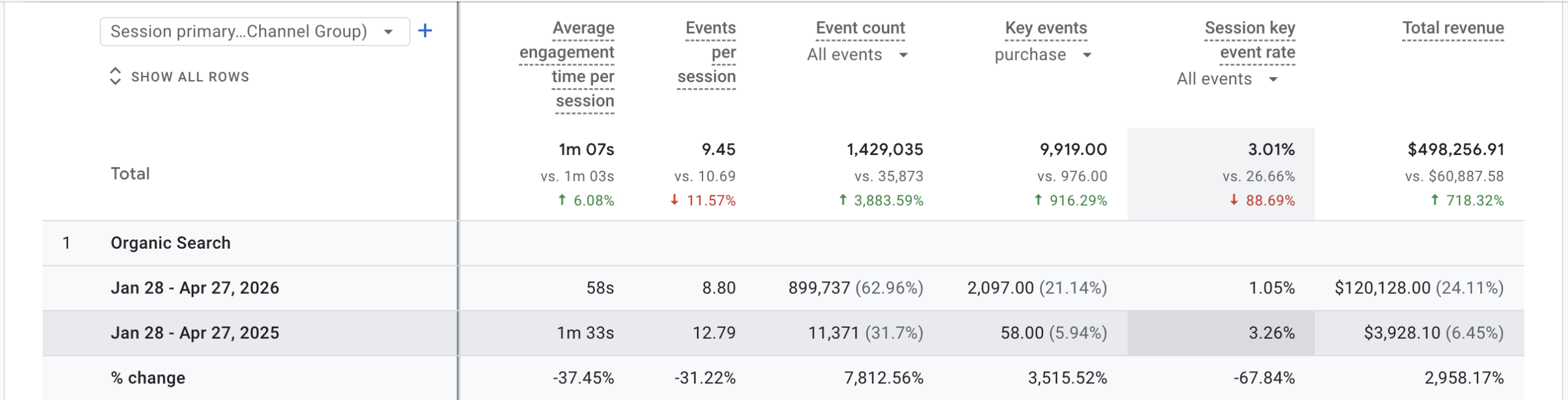
A good signal to watch is how traffic and revenue move together. If your traffic is increasing but revenue isn’t following, that usually means you’re attracting the wrong audience.
But when both grow at the same time, it’s a strong indicator that you’re reaching people who are actively searching for what you offer.
The local business from the previous example experienced a 11,404% increase in organic traffic accompanied by a nearly 3,000% increase in organic revenue.
This show that the website is well positioned to attract potential customers.
Are your returning customers trending upward?
Local marketing works best when you think of it as a system, not just a set of channels.
Every business needs a consistent way to bring in new customers while also retaining them.
The challenge is doing that in a way that’s cost-effective.
Most new customers discover businesses through search, whether that’s organic or paid. These are your discovery channels. It’s how people find you when they’re looking for something related to what you offer.
A simple way to understand if your system is working is by looking at your direct traffic over time. Direct traffic represents returning customers and repeat visitors.
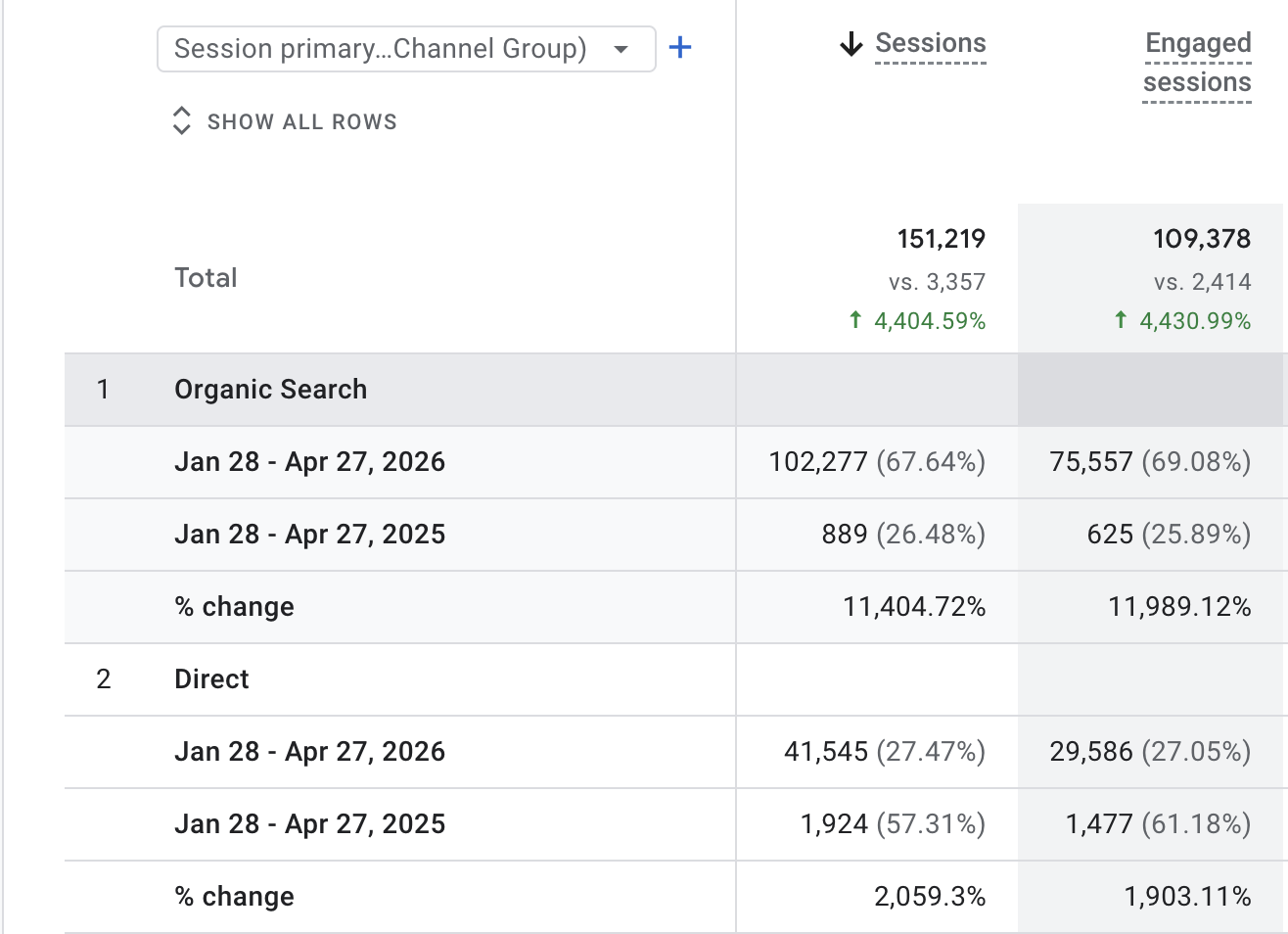
If your discovery traffic is increasing, and your direct traffic is growing alongside it, that’s a strong signal. It means you’re giving new customers a reason to come back.
And that’s when marketing starts to compound.
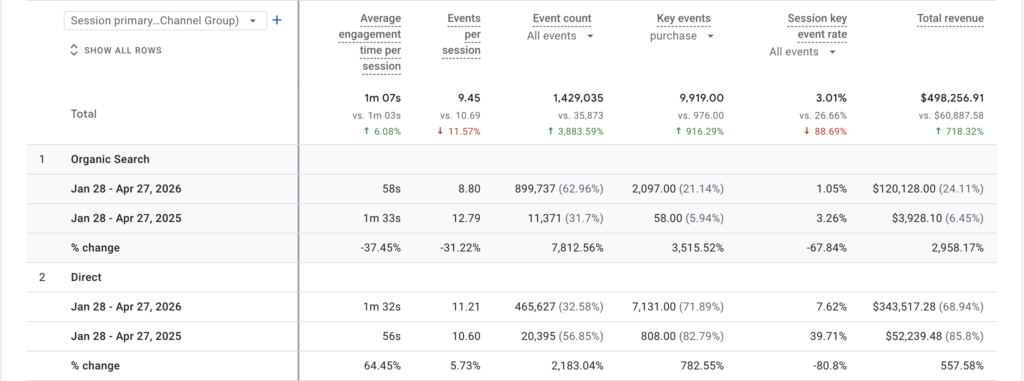
The 3,000% increase in organic revenue for this brand led to a nearly 600% increase in direct traffic revenue.
Is your average order value increasing?
Another number worth paying attention to is your average order value (AOV) or how much a customer spends per transaction.
You can find this number in your CRM or sales platform. I like to break it down by marketing channel to understand how different types of traffic behave once they land on the site.
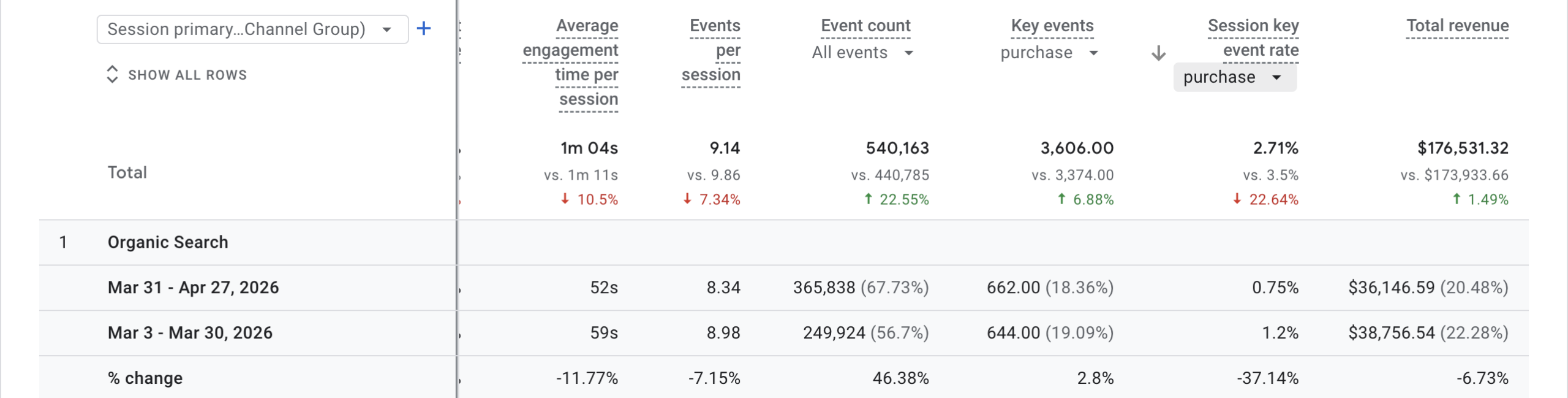
For example, you might see orders increasing, but revenue staying flat or decreasing. In one case, a business sold 18 more products than the previous month, but organic revenue still dropped by 6.7%.
It means the business is attracting more customers, but they’re spending less per transaction.
That’s an opportunity to increase the value of the traffic you already have.
Increasing your AOV can come from simple things like:
- better product bundling
- upsells
- pricing structure
- product positioning
It’s one of the most cost-efficient ways to grow revenue, because you’re building on demand that’s already there.
How well are you attracting website visitors who are ready-to-buy?
Here’s a simple, free way to tell if your website is attracting potential customers.
You can use a tool like Semrush (free for up to 10 searches a day) to see what types of phrases people search before landing on your website.
Informational phrases are things like:
- “how to…”
- “what is…”
- “when should I…”
People use these when they’re learning.
Commercial and transactional phrases are:
- “best [product/service]”
- “where to buy [product]”
- “[product/service] near me”
Your target customer uses these when comparing options or getting ready to make a purchase.
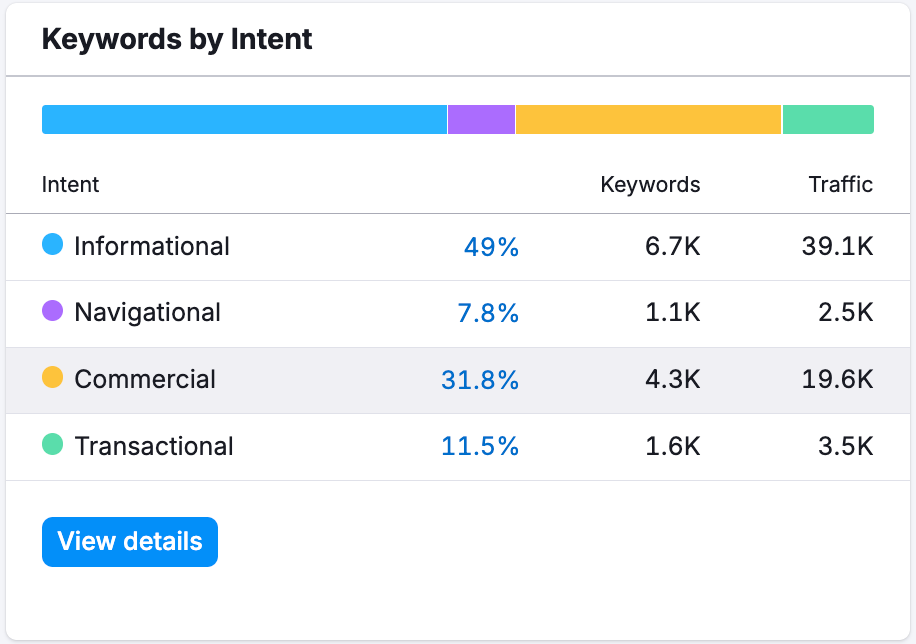
What you want to see is a healthy amount of your traffic coming from these higher-intent searches – searchers know what they want, but don’t know the brand to get it from.
You don’t want your site to feel like it only exists to sell. Informational content still plays an important role. It helps you reach people earlier in the process and builds trust over time.
But if the majority of your traffic is coming from informational searches, that’s usually a sign you’re attracting the wrong audience. Those visitors have much lower conversion rates.
They’re useful for building awareness and supporting your site, but they shouldn’t be carrying most of your traffic.
The goal is balance.