
Here’s how local customers decide where to buy according to survey data and consumer studies.
Key Points
- Google is the primary way customers find local businesses
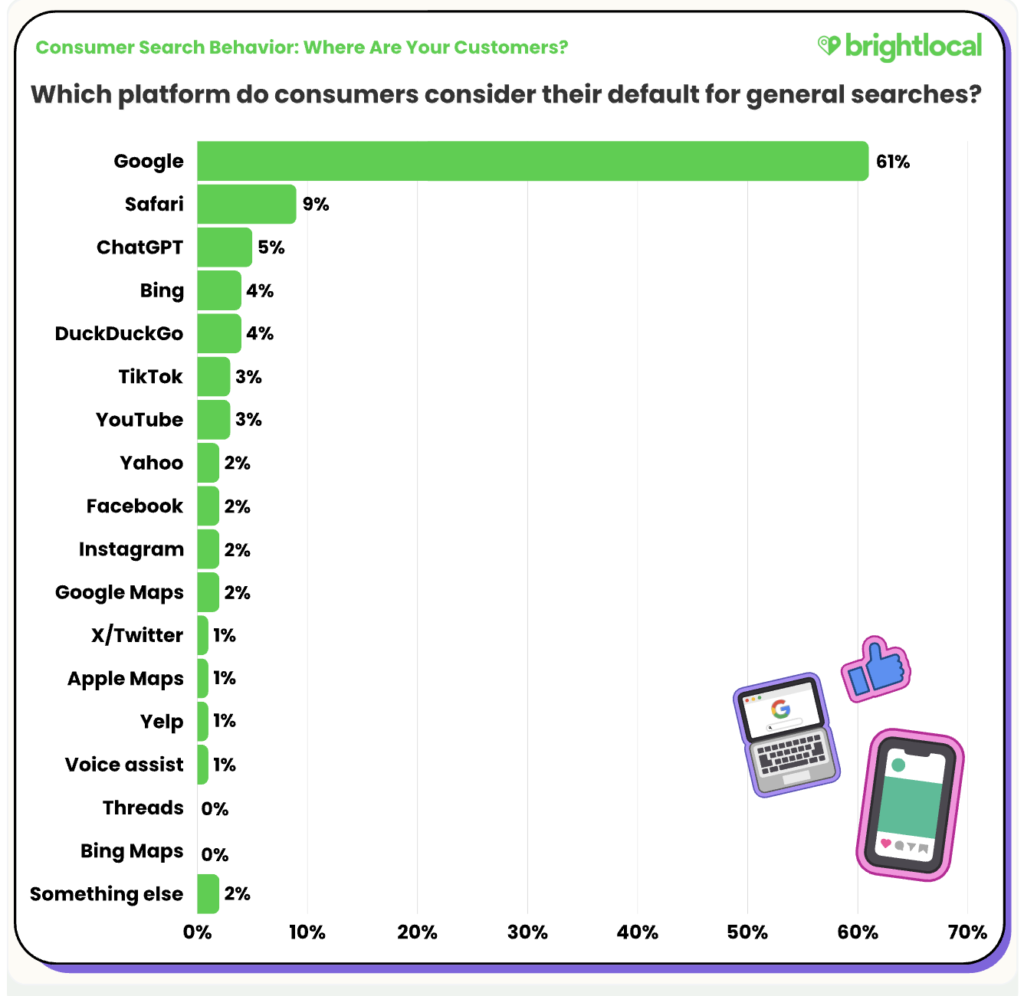
87% of consumers have used Google to research local businesses, and 61% consider it their default search tool. - Local discovery is consistent across age groups
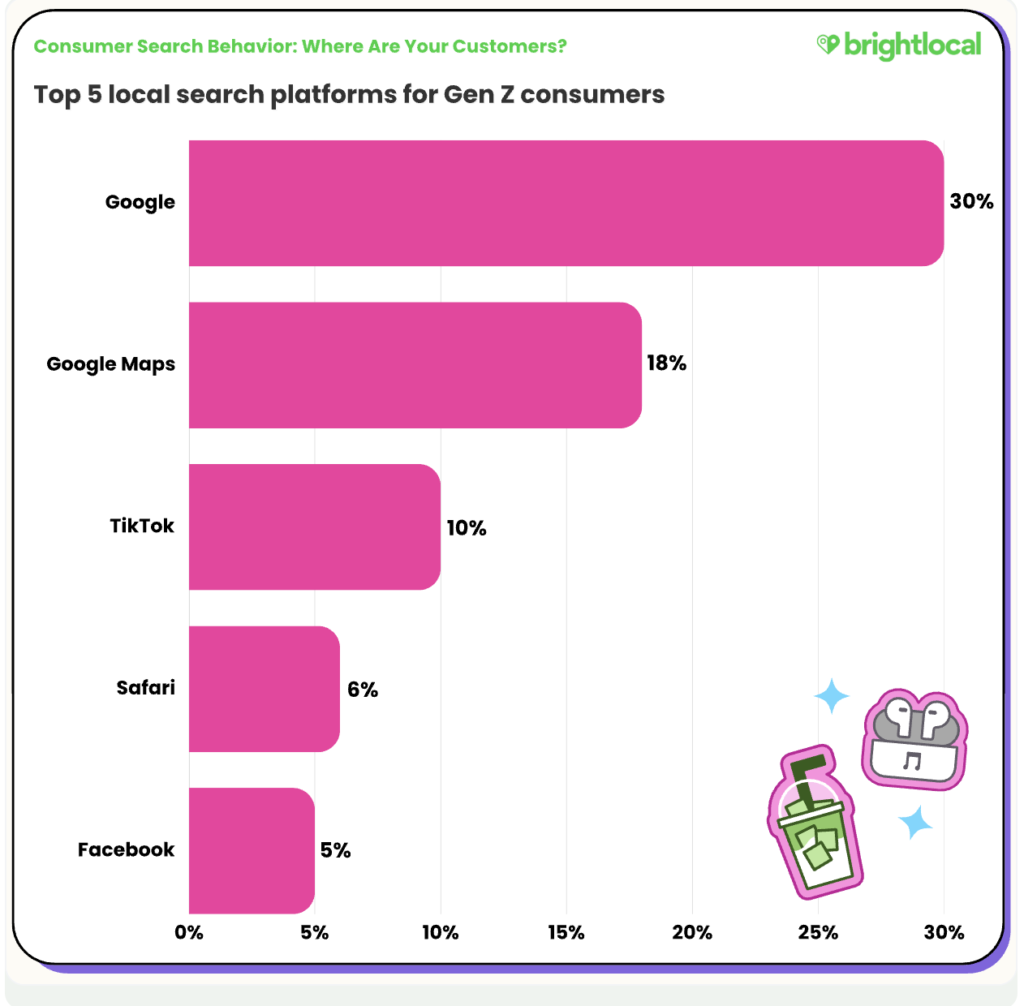
Even among Gen Z, 30% use Google for local search vs 10% for TikTok. That reliance increases with age. 43% of Millennials, 48% of Gen X, and 57% of Baby Boomers use Google as their primary method. - Local searches turn into real customers quickly
76% of people who search for something nearby visit a business within a day, and 28% make a purchase. - Most clicks go to a small number of positions
44% of clicks go to the Local Map Pack, 29% to organic results, and 19% to paid ads. Only 8% of users explore beyond that. - Top positions get the majority of attention
Within organic results, ~69% of clicks go to the top 3 listings, with 40% going to the #1 position. - Clear information influences decisions
85% of customers prioritize contact info and hours, 83% look at price, and 80% check product availability when evaluating options. - Reviews are critical for trust
98% of people read reviews, and 74% use two or more platforms to compare businesses. - Recent reviews carry the most weight
73% of consumers only pay attention to reviews written in the last month.
Local Customers are Most Likely to Use Google Search to Find You
Credit: Brightlocal
Studies show 87% of consumers have used Google to research local businesses. 61% consider it their default for general searches compared to 5% for ChatGPT and below 4% for each of the major social media platforms.
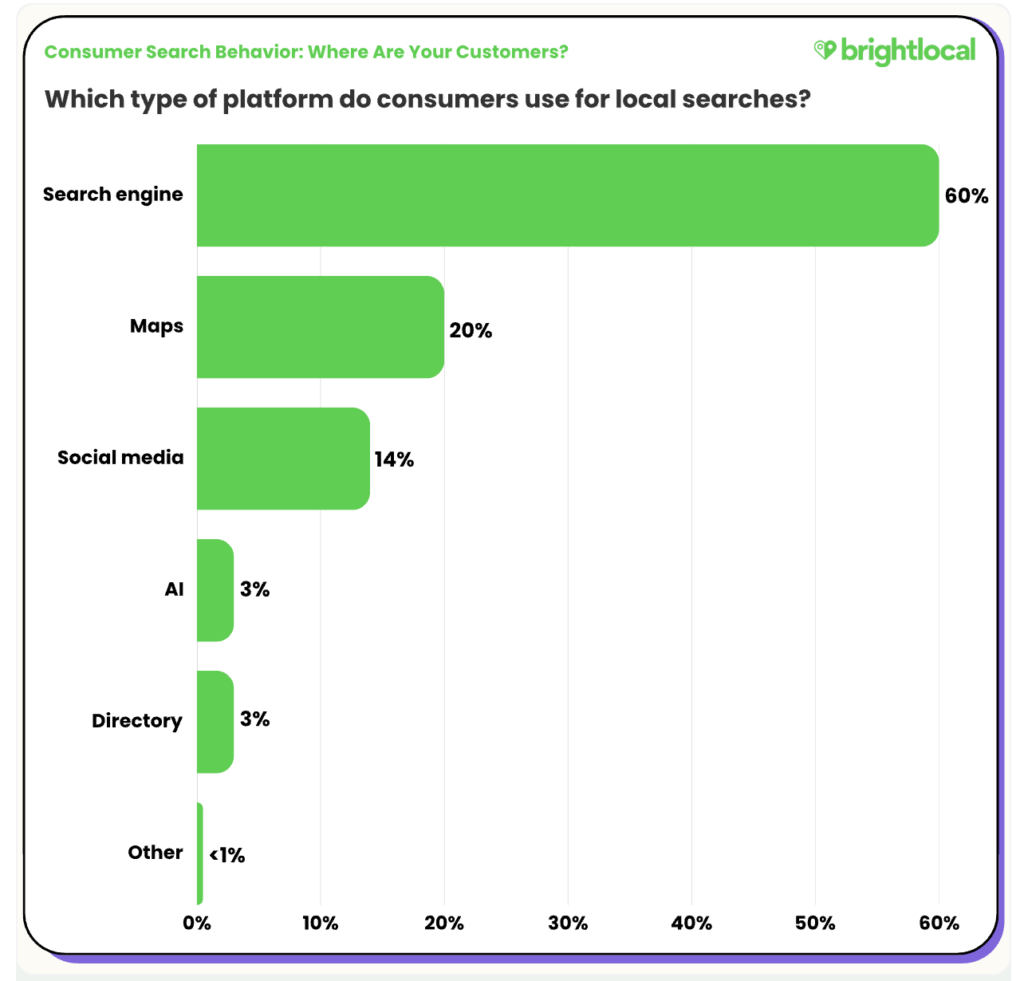
60% of respondents use search engines like Google and Bing for local searches, compared to 14% who use social media, and 2% each for AI tools and directories.
How Local Search Behavior Changes by Age Group
Even among Gen Z, Google is still the primary way people find local businesses. 30% use Google for local search compared to 10% who use TikTok.
Google usage for local search increases with age. 43% of Millennials, 48% of Gen X, and 57% of Baby Boomers use it as their primary way to find local businesses.
How Often Local Searchers Turn Into Buyers
According to Google data, 76% of people who use their smartphone to search for something nearby visit a local business within a day. 28% make a purchase.
How Customers Decide Which Local Businesses to Choose
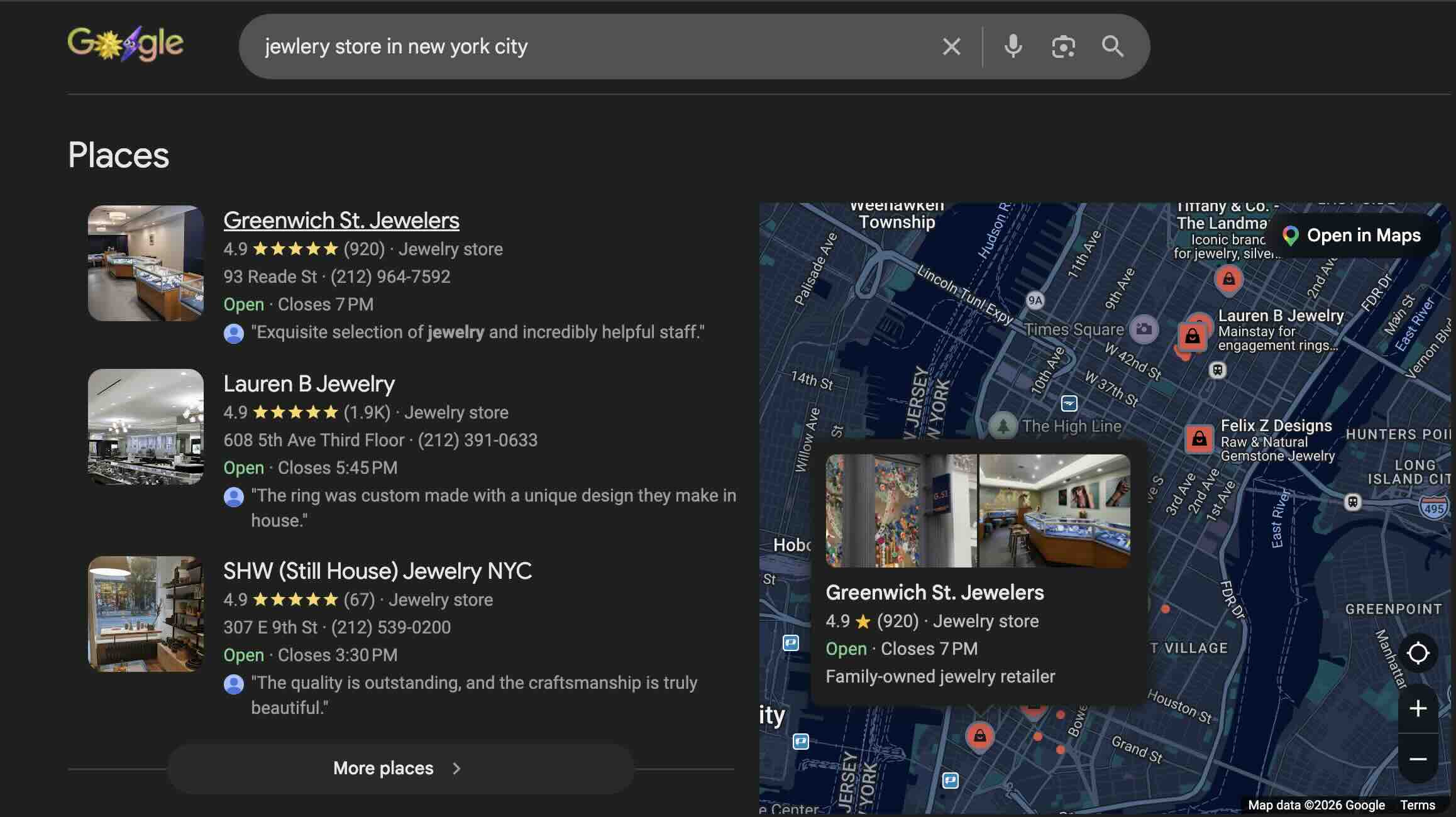
When a local shopper searches and lands on a search results page, they scan a few key areas:
- Local map pack
- Paid ads
- Organic results
Here’s where local shoppers are most likely to click:
- 44% click the Local 3-Pack
- 29% click organic results
- 19% click paid ads
- 8% explore “more local results”
Inside the 44%: Map Pack Click Distribution
Of the 44% clicking the Local 3-Pack:
- #1 position: 17.8% click-through rate (CTR)
- #2 position: 15.4% CTR
- #3 position: 15.1% CTR
Inside the 29%: Organic Click Concentration
Of the 29% clicking organic results ~69% go to the top 3 results, with 40% going to the top position.
Making Sense of This
When a local shopper lands on a search results page, they’re scanning the most visible areas and making a quick decision on where to click. The data makes that behavior clear.
Nearly half of all clicks (44%) go to the Local 3-Pack, while 29% go to organic results and 19% to paid ads. Only a small fraction of users explore beyond that. This means that before a customer ever compares businesses, they’ve already narrowed their attention to a few highly visible sections of the page.
Local search traffic isn’t evenly distributed. It’s concentrated heavily in a small number of positions.
Most customers aren’t scrolling to comparing dozens of options. They’re choosing from what they see first. Visibility at the top of the page determines whether a business is a part of the decision making process.
How Searchers Evaluate Local Businesses to Decide Where to Buy
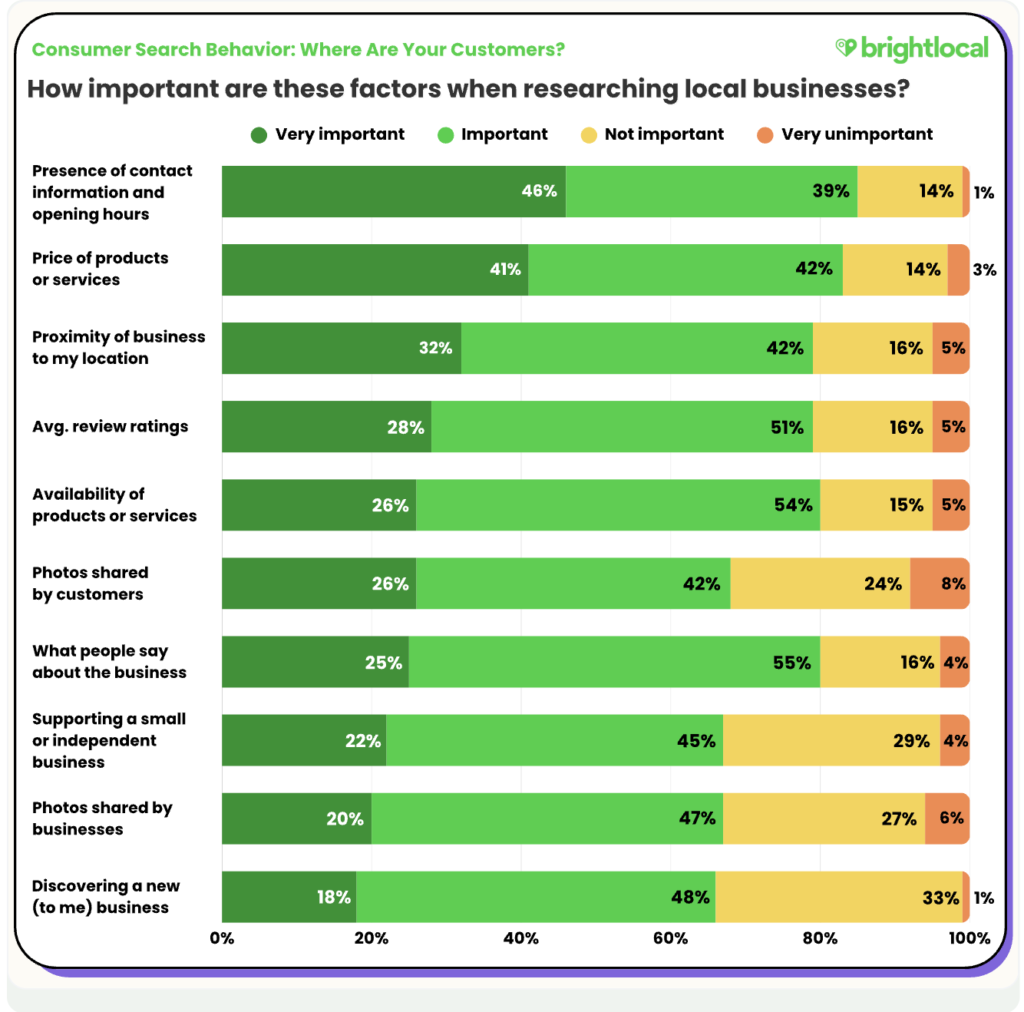
The most important factors for searchers researching local business are the presence of contact information and opening hours (important for 85%), price (83%), availability of product or service they’re looking for (80%), followed by what people say about the business (80%), and average review rating (79%).
98% of people read reviews before choosing a business, and 74% use reviews from two or more platforms to compare them.
Review recency matters. 73% of consumers only pay attention to reviews written in the last month.
Taken together, this shows how quickly customers evaluate their options: they’re looking for clear information, relevant offerings, and recent proof that others trust the business.
How to Apply This to Your Customer Acquisition
Customer acquisition relies on being visible and relevant when searcher are looking to buy.
Most customers start with Google, scan a few options, and make a decision quickly. They’re choosing from what shows up first and what feels trustworthy in the moment.
That means your focus should be on three things:
- Showing up in the right places
If you’re not visible in the Local Map Pack or near the top of search results, you’re not apart of the decision process. - Making it easy to choose you
Clear hours, pricing, product availability, and strong visuals help customers quickly understand what you offer. The easier you are to evaluate, the more likely you are to be chosen. - Building consistent trust signals
Reviews matter. How many you have and how recent and active they are. A steady flow of fresh reviews shows that your business is active and trusted right now.
When you put this together, customer acquisition becomes about capturing the demand that already exists.
Local search gives you an opportunity to position your business where customers are already looking and give them a clear reason to choose you.