
You’re getting visitors to your website but they’re not buying. Here’s why.
Key Points
- The reason why you’re getting visitors and they’re not buying is because most of your traffic is landing on informational pages instead of pages where people can view your offerings and take action.
- Informational traffic and browsing traffic behave very differently. One is researching, the other is ready to act. Page type influences conversion rate
- Pages designed for browsing, buying, or booking consistently convert higher than general or informational pages.
Here’s an example.
High-Intent Traffic vs General Traffic
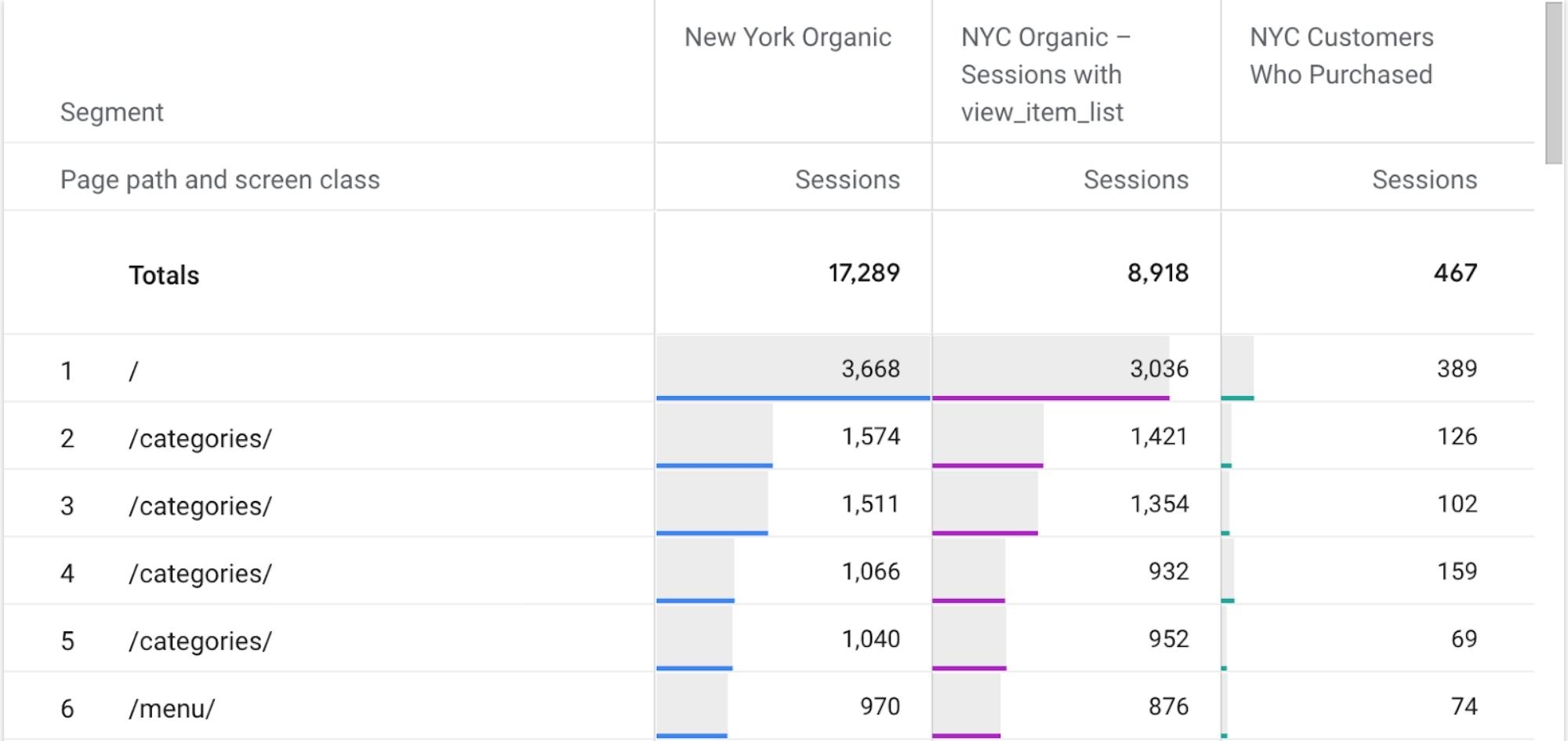
Data taken from Google Analytics
Here’s a local product business in NYC who’s doing a good job converting visitors through it’s website.
The image above shows over 17,000 organic website visits came searchers located in the New York Metro area. A large portion of revenue came from a smaller subset of that traffic.
Looking at the data, ~9,829 sessions (57%) landed on the homepage + the top 5 performing product categories.
These aren’t informational pages. These are buying pages.
What these visitors did differently
Out of the 17,289 website visits, 8,918 sessions (51% of total traffic) went on to browse products.
That means the majority of visitors engaged with inventory – a strong signal of buying intent.
Conversion rates tell the real story
Category pages saw 6%–15% conversion rates compared to the overall site average of 2.7%.
Visitors landing on these pages are 2–5x more likely to purchase.
Most visitors who land on category pages browse products
When visitors landed on the homepage and top category pages, here’s how many went on to browse products:
- Homepage: 3,036 out of 3,668 visits → ~83% browsed products
- Top-performing category page #1: 1,421 / 1,574 → ~90%
- #2: 1,354 / 1,511 → ~90%
- #3: 932 / 1,066 → ~87%
- #4: 952 / 1,040 → ~91%
- #5: 876 / 970 → ~90%
Across these high-intent pages, 83–91% of visitors went on to browse products.
When you target people searching locally for what you offer, you’re getting a more engaged audience.
These are customers who are nearby, actively looking, and ready to take action.
That’s why such a high percentage of them move straight into browsing products.
Turning website visitors into customers
Once someone moves from landing on a category page to browsing products, the likelihood of them making a purchase increases. Across these pages, between 7% and 17% of product browsers went on to purchase.
That’s a major jump compared to typical website averages, which usually sit around 1–3% of total visitors. It shows that by the time someone is browsing local products, they’re deciding what to buy.
At that point, the job of the website isn’t to convince them to buy, it’s to make it easy for them to follow through.
This is why high-intent pages outperform blog content. They may attract fewer people, but those people are much closer to taking action – and that’s what drives revenue.
The business in this example has the option for customers to submit online orders or pickup in-store. So even if customers don’t convert online, driving more traffic to these pages opens opportunities for in-person transactions, future purchases, and product or services awareness.
The Shift Most Local Businesses Need to Make
Instead of trying to send more traffic to blog posts and general pages, try intentionally guiding traffic toward pages where customers can browse, buy, or book.
Even if fewer people land there, your chances of converting are significantly higher.