
In highly competitive local markets, paid advertising isn’t always an efficient way to acquire customers.
For many storefront businesses in New York City, majority of their revenue comes from inconsistent foot traffic.
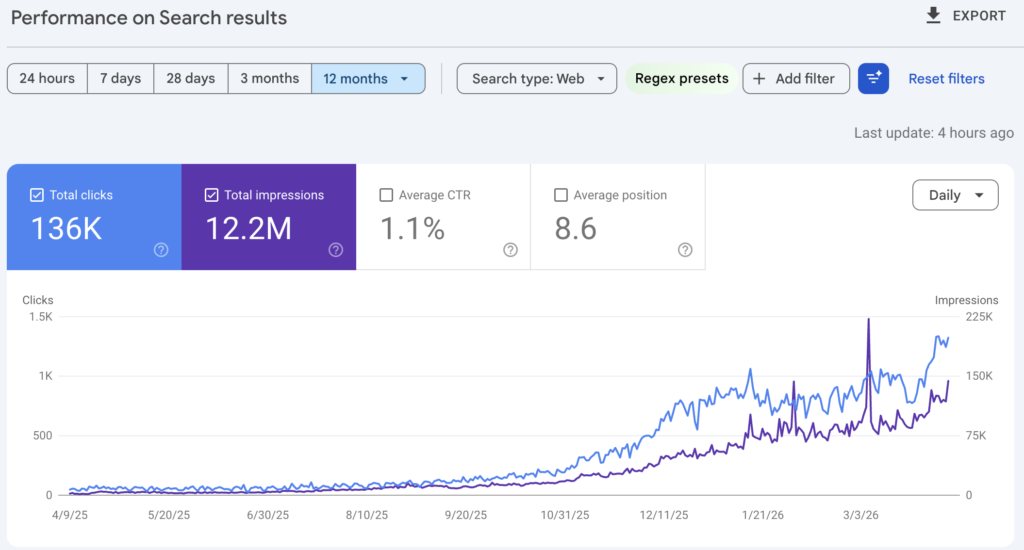
This local SEO case study shows how one Manhattan storefront went from relying on walk-ins to attracting consistent customer demand through organic search in under 90 days.
Today, the website generates over 50% of the businesses revenue compared to just 13% less than a year ago.
Highlights
Changes over a 10 month period (June 2025 to March 2026):
- Revenue from organic search up from $14.8k to $41.2K/month
- Direct Traffic revenue up from $15.5k to $73.3k/month
- Total monthly revenue up from $223K to $322K (+44.4% YoY)
- Website contribution to total revenue up from ~13% to 52%
- Monthly organic traffic up from 2k to 29k
- Top 3 organic search results rankings up from 11 to 605
- Website contribution to total revenue up from ~13% to 52%
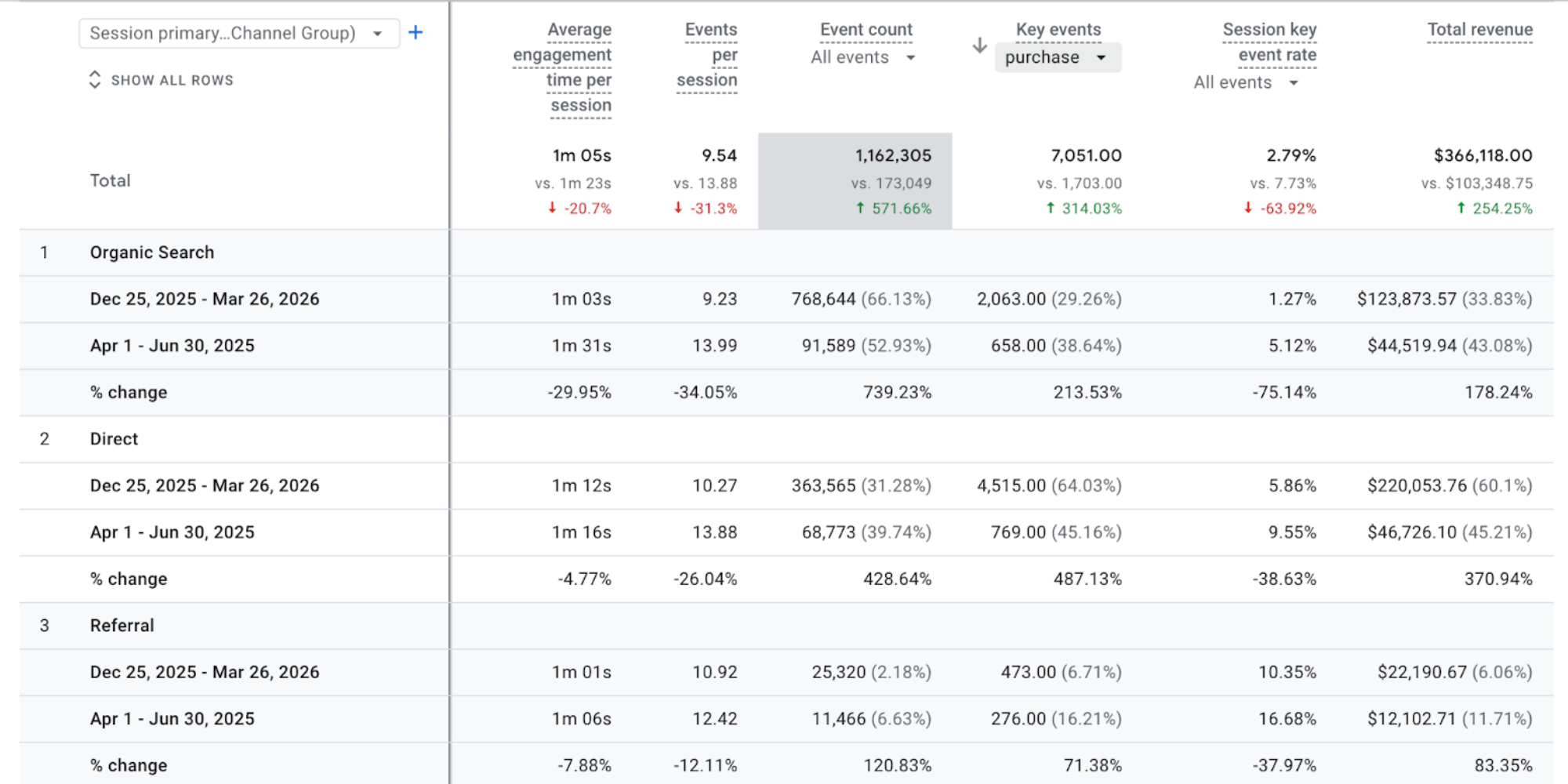
3 Months Before Working with NYSG vs Latest Period
The Business Challenge
The business operates in one of the most competitive markets in Manhattan, with eight direct competitors within a 0.9-mile radius.
In this type of market, increasing your presences in search engines like Google plays a major role in customer acquisition.
The owner recognized nearby competitors generating up to 3x more organic visitors to their websites. His business relied heavily on foot traffic and word of mouth.
The key issue was competitors showing up first when customers were actively searching for nearby options. They were capturing that demand and converting it.
At the time, the business was operating at a loss, with high fixed costs due to rent, salaries, and other operating expenses.
Over the following months, we worked with them to implement the Local Demand Capture (LDC) System. The goal was to turn local search into a reliable acquisition channel.
The result was a 99k+ year-over-year increase in monthly revenue, with substantial increases within the first 90 days.
Performance Overview
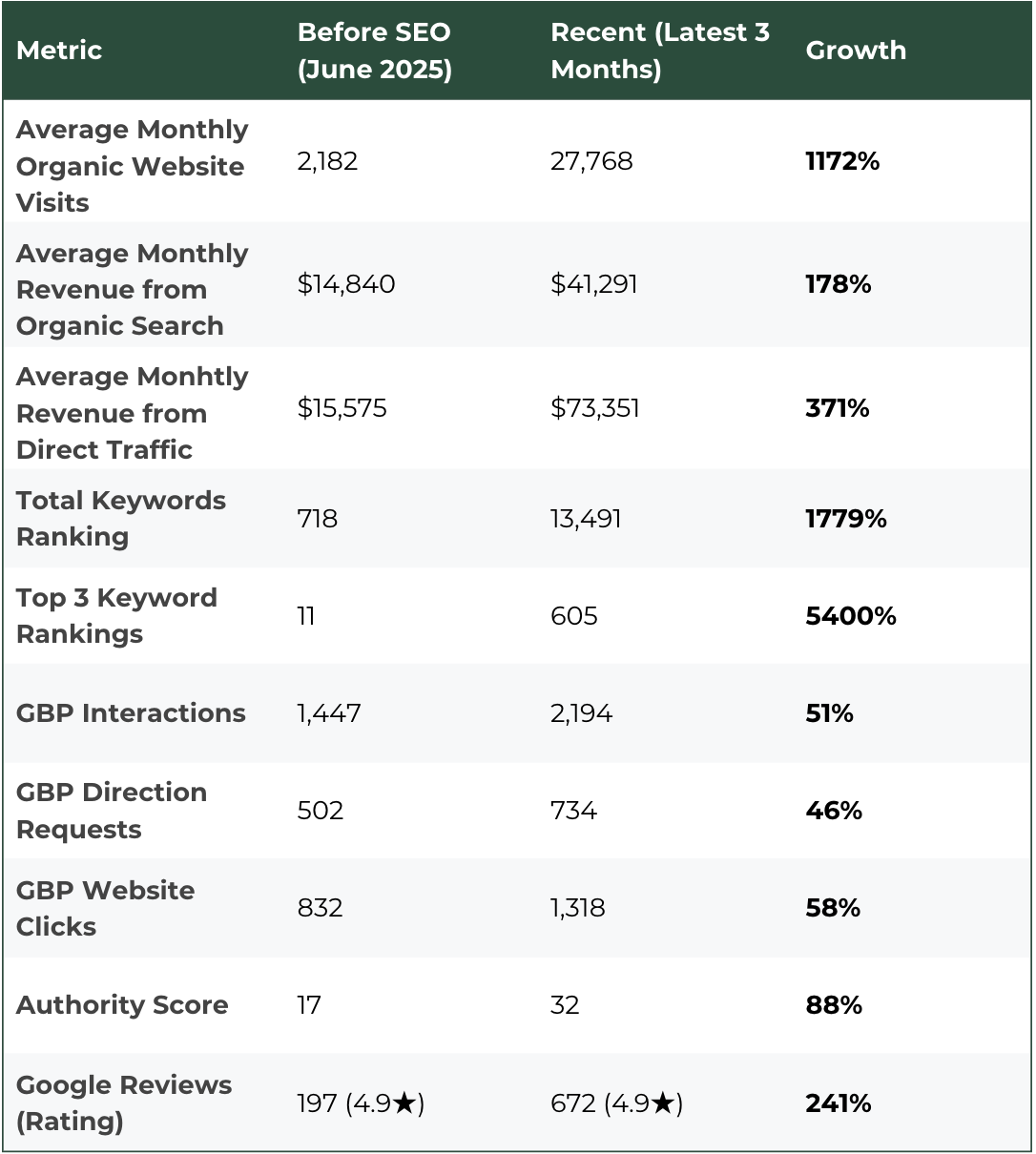
Metrics presented in 3-month increments to account for monthly fluctuations
The Solution
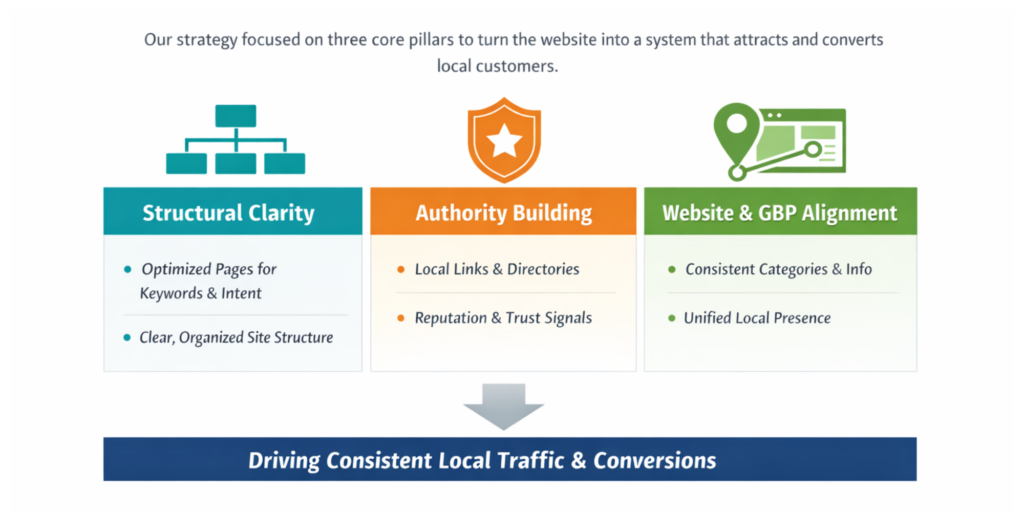
The owner partnered with New York Search Group to implement the Local Demand Capture system.
It’s a framework that helps local businesses attract existing demand to their websites and convert it into consistent monthly revenue.
Here are the three core principles:
1. Aligning the Website with Local Search Demand
Showing up when customers are ready to buy
The first step was restructuring the website to reflect how customers search when they’re looking for solutions the business offers.
We assigned each page on the website with a clear role – targeting a specific set of relevant search queries local customers frequently use.
This process eliminated overlap between pages, creating a more organized, search intent-driven structure.
Search engines better understood:
- what the business offers
- which types of customers each page is for
- when to surface each page on the site in search results
This shift increased the likelihood of the business appearing in search results when customers were actively looking to make a purchase.
2. Positioning the Brand as a Local Authority
Standing out in a market where competition is dense and offerings are similar
Most businesses offer comparable products or services in competitive local markets.
Search engines use trust signals and perceived authority to decide which businesses to showcase.
Our strategy focused on strengthening the business’s presence across the local ecosystem through credible signals, including:
- placements on relevant local platforms
- strategic partnerships with adjacent local business and organizations
- listings in trusted directories
- content that reinforces expertise and legitimacy
These signals helped establish the business as a recognized and reliable option within it’s area.
3. Aligning the Google Business Profile with the Website
Turning visibility into customer activity
We treated the website and Google Business Profile as a single system.
We implemented a process to:
- consistently generate high-quality customer reviews
- refine categories and offerings to match website structure
- continuously update the profile with relevant content and signals
This alignment improved visibility in local map listings, increasing the business’s ability to convert searchers.
How the System Works Together
Each component of the system reinforces the others.
As the business became more relevant, structured, and trusted, the website and its local listing gained momentum, leading to stronger visibility and more consistent customer flow.
Instead of relying on chance discovery, the business was now positioned to capture demand at the exact moment customers were ready to buy.
The Results
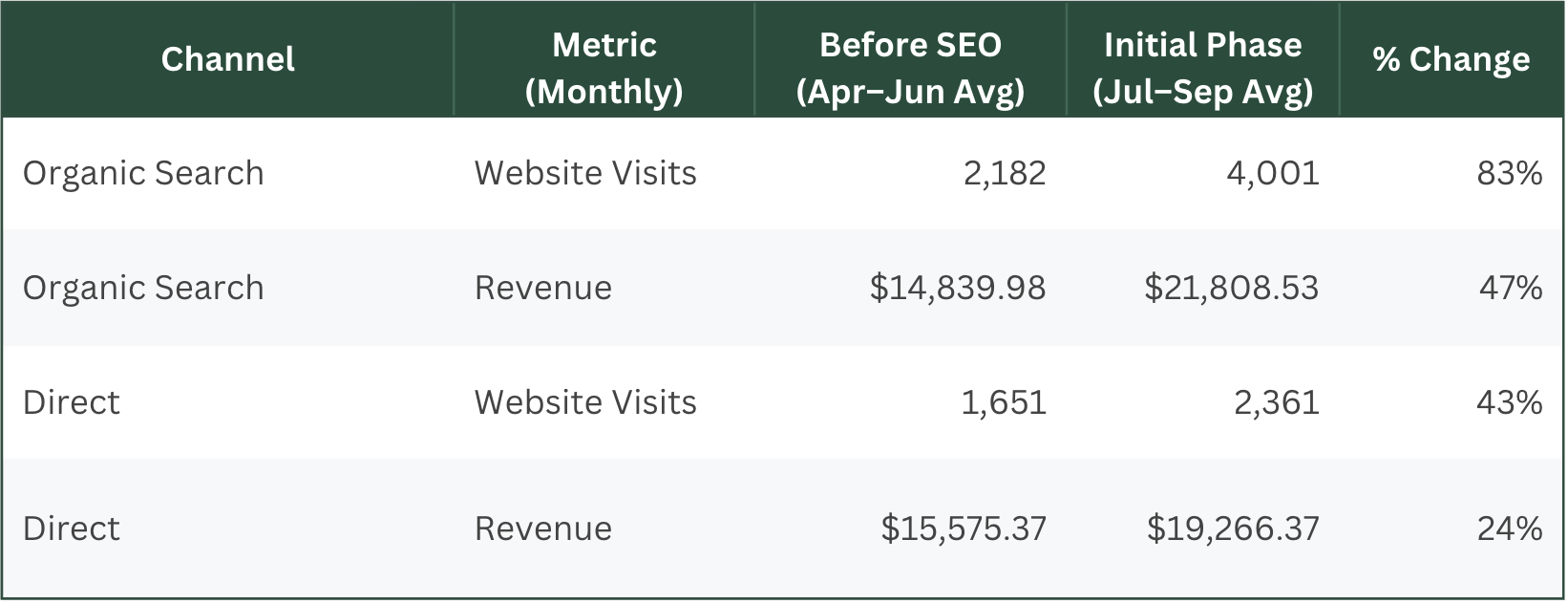
Business impact after the first 90 days
The impact was noticeable within the first few months.
Organic search visitors began to increase, allowing the business to capture a larger share of local demand.
That early traction quickly translated into more website traffic and a steady increase in customer activity.
Monthly Organic Website Visits
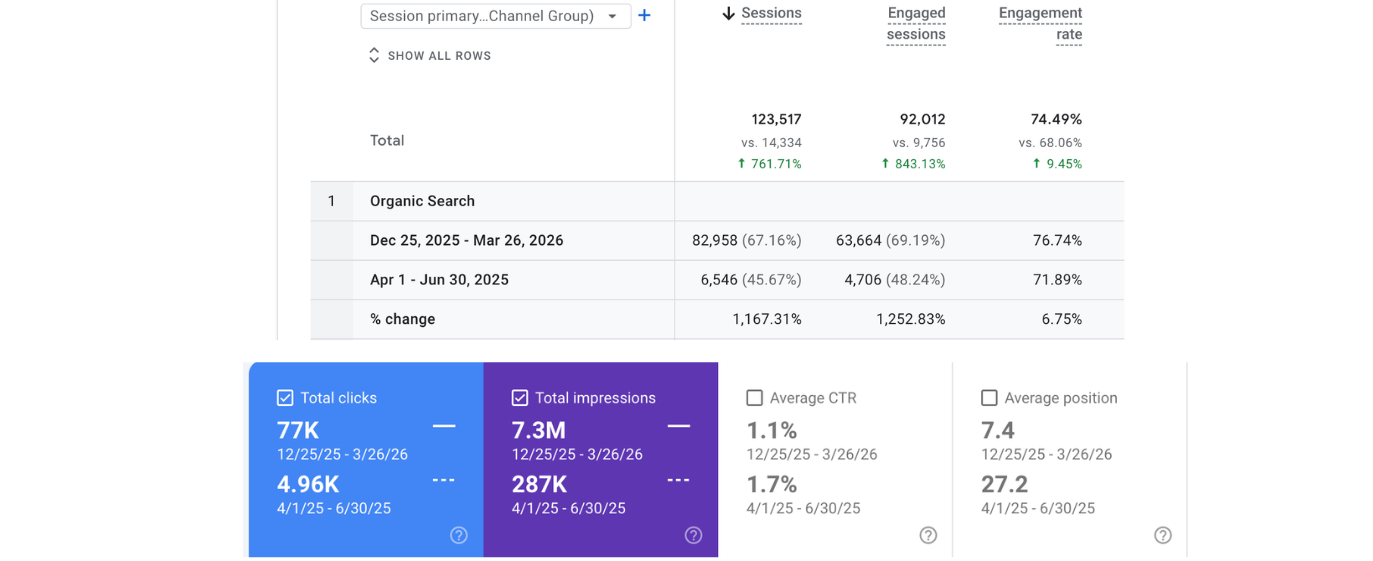
Growth in website visitors over time
Monthly website visits from organic search grew from an average of 2,182 visits to nearly 28,000 in recent months.
Monthly Revenue from Organic Website Visits
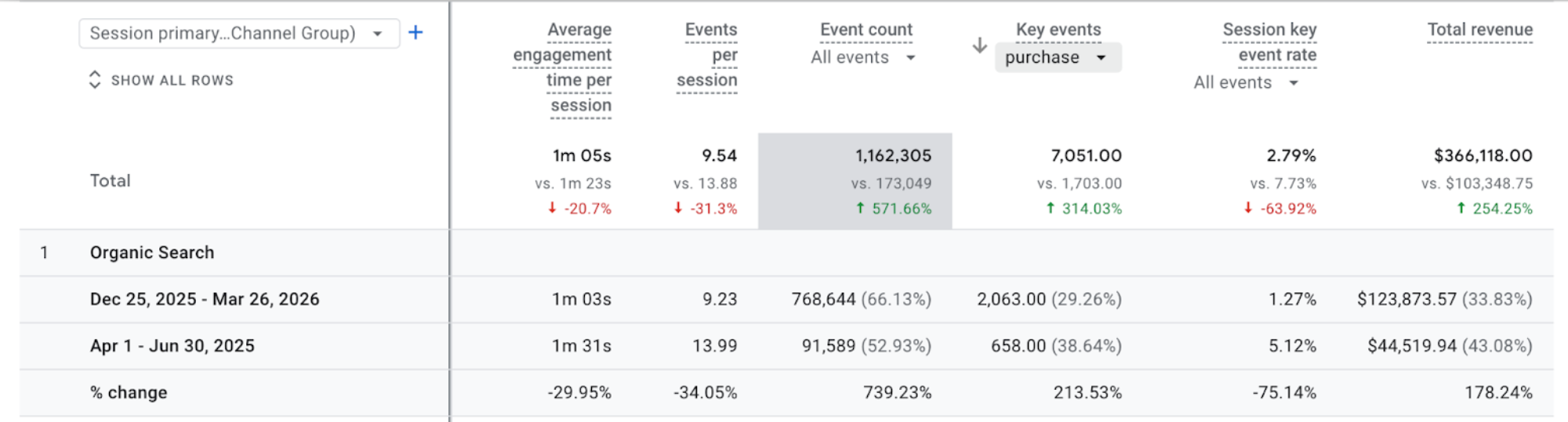
Revenue generated from organic search traffic also increased significantly, growing from $14,840 average monthly revenue to over $41,000/mo.
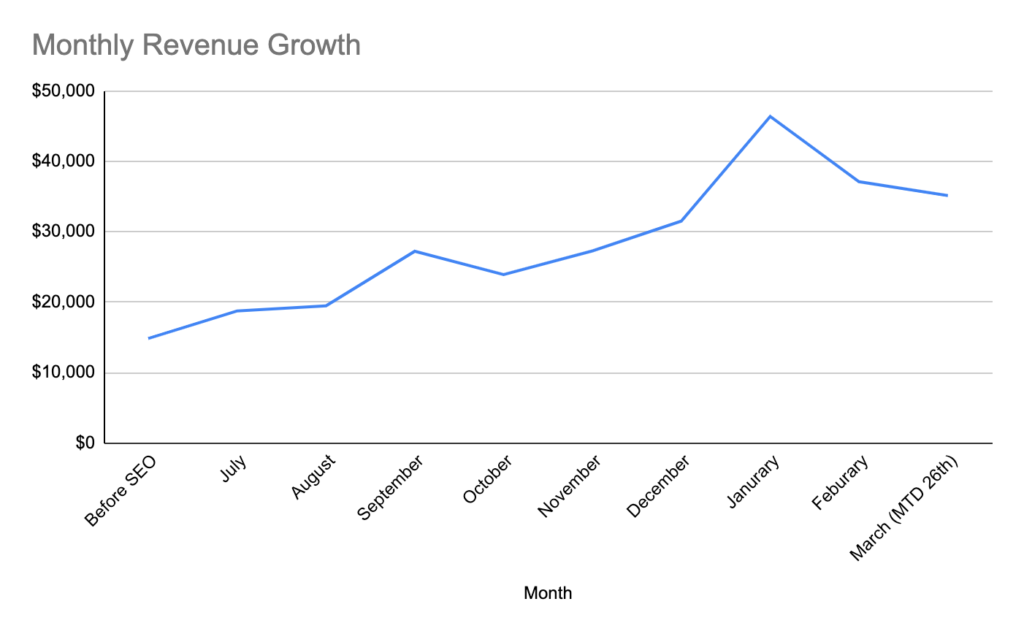
Organic Search Impact on Total Revenue
This section breaks down how the business’s increased search presence translated directly into revenue growth.
Revenue from Repeat Customers

Direct Traffic Revenue Month 1 vs Month 10
As search began bringing in new customers, those same visitors no longer needed to use it to find the business.
They were now coming back to the website directly – typing in the URL, referencing their browser history, or using bookmarks.
We saw revenue from direct traffic increase from 13.5k in June to 109.3k in 10 months later – a 710% increase.
This is a strong signal of brand trust and customer retention.
Revenue from Link Building
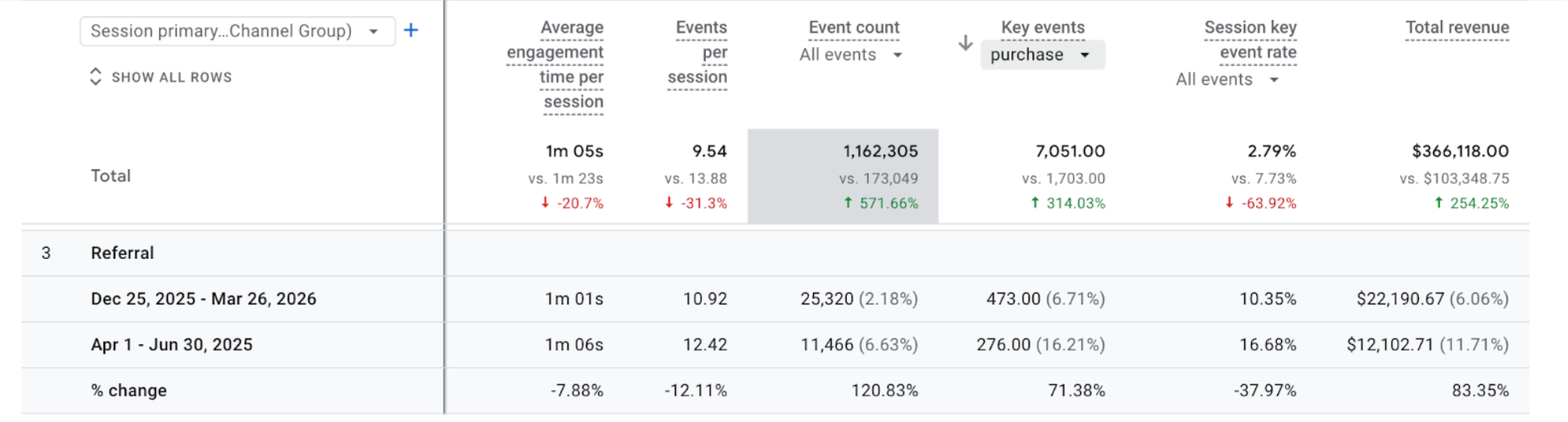
We saw referral traffic revenue improve by over 80% from strategic placements on relevant third-party websites that introduced the business to new audiences.
Unlike organic search, where customers are actively looking, referral traffic represents discovered demand – people encountering the business through trusted sources and deciding to engage.
Online Marketing’s Impact on Total Revenue
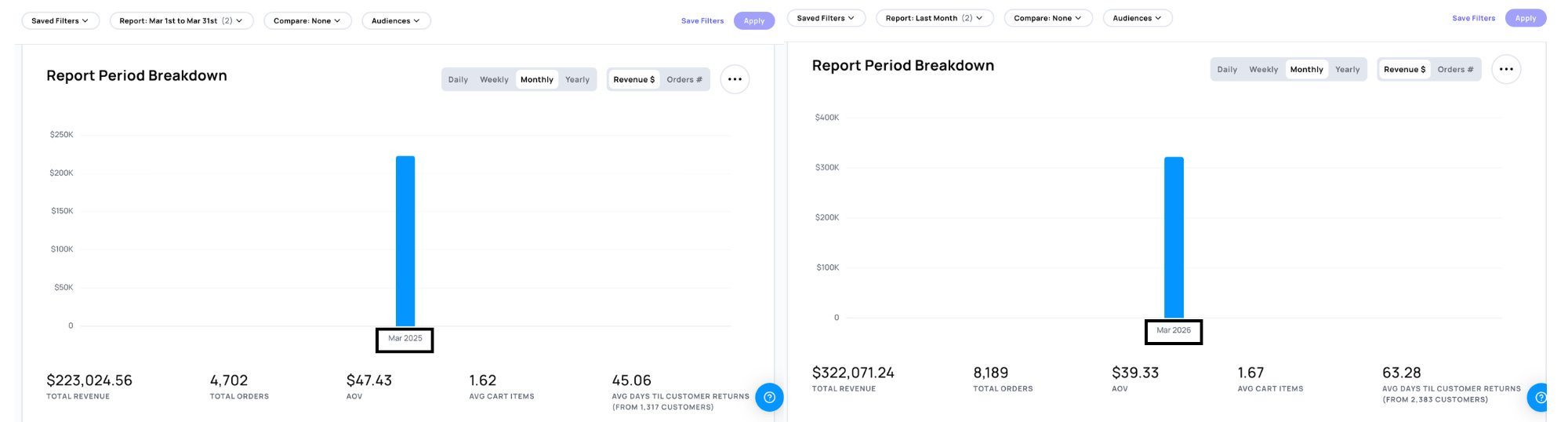
From company’s CRM
The business experienced strong year-over-year growth in total monthly revenue, increasing from $223k to $322k in March 2026.
This represents a +44.4% YoY increase in monthly revenue.
Before implementing the LDC system, the company’s website generated roughly 13% of total monthly revenue.
Today, it accounts for around 52% of total revenue.
Website Visibility – Presence in Search Results
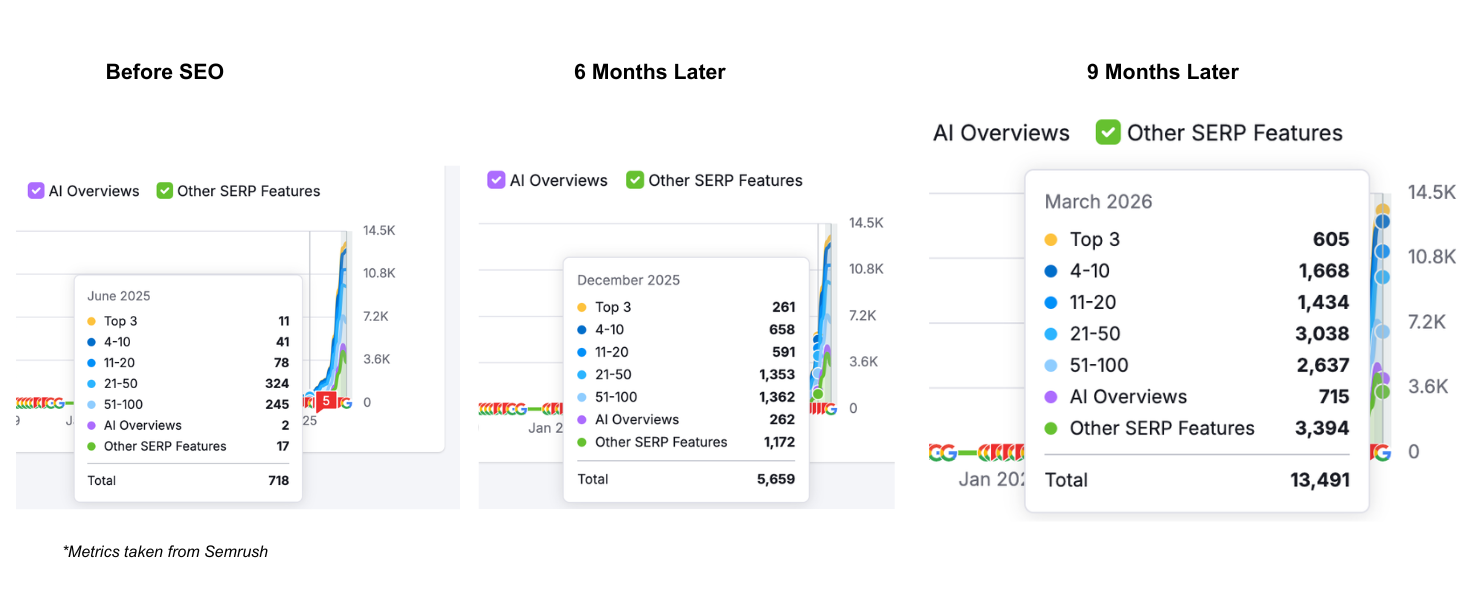
The website’s presence in organic search results expanded dramatically.
The site grew from ranking for 718 keywords to over 13,000, with a 5400% increase in top-3 ranking positions.
Traffic Value

Estimated Monthly Traffic Cost (if generated through Google Ads)
Over the course of the campaign, the website grew from roughly 2,000 visitors to 30,000 monthly visitors.
The business would have to invest an estimated $18,000+ per month to get this same value of traffic through Google Ads (not including ad agency fees).
For a business generating approximately $41,000/month in revenue from this traffic, relying on paid acquisition would have significantly reduced margins and ROI.
Instead, by investing in organic search, the business was able to acquire customers without paying per click and maintain stronger profit margins.
Google Business Profile Growth
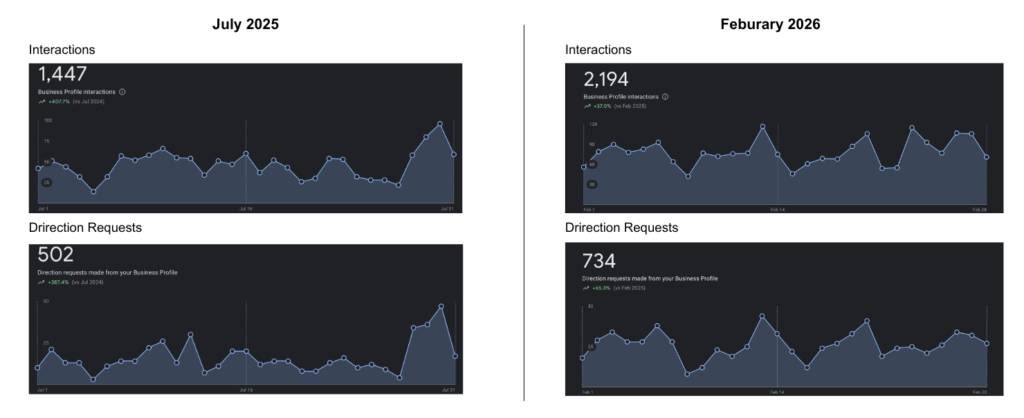
Start of campaign vs recent
Local search performance improved alongside website growth.
Google Business Profile interactions, website clicks, and direction requests all increased by over 45%, indicating stronger engagement and immediate customer impact.
The business also experienced a substantial increase in reviews, growing from 197 to 672 while maintaining a 4.9-star rating.
This reinforced trust and contributed to higher conversion rates.
Outcome
The business’s website transitioned from an underperforming asset into a growing customer acquisition channel that consistently drives revenue.
The owner noted that organic search is the main reason the store has been able to turn a profit.
This growth came from putting the Local Demand Capture system in place, helping the website show up when customers are searching and turning that demand into consistent sales.
Conclusion
The results from this case study show that when your business shows up when customers are searching, growth becomes predictable.
In a market where you can’t rely on ads, the businesses that win customers consistently are the ones who show up first in organic search results.