
We analyzed over 23,000 transactions from a Manhattan storefront over the last 3 months.
The average order value (AOV) across all sales was around $39.
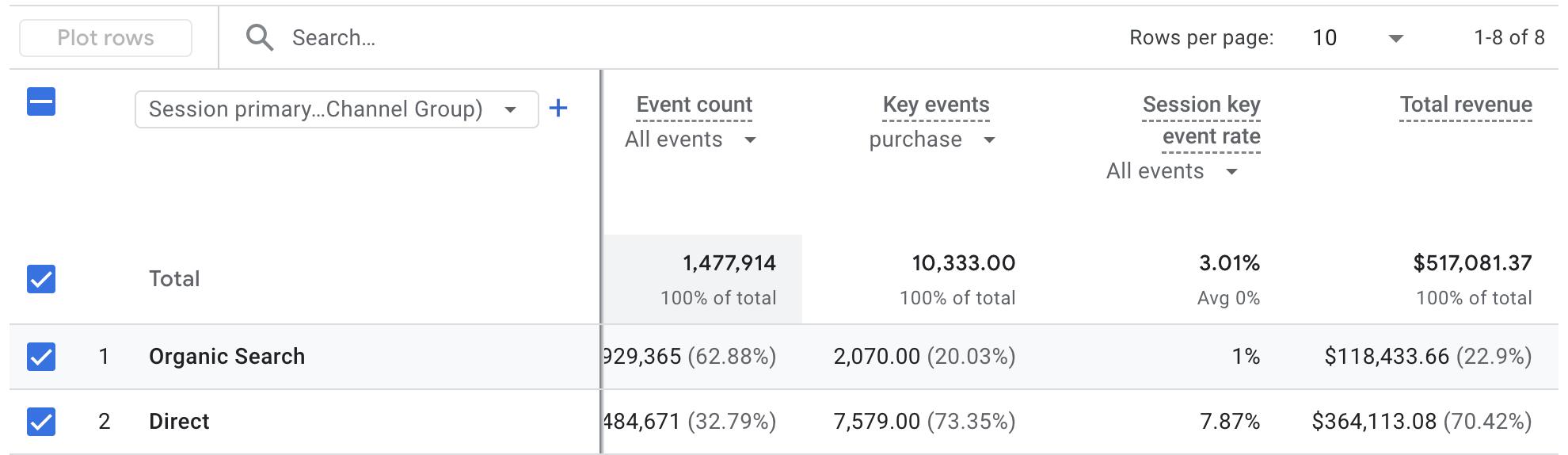
But when we isolated orders coming through the website – both organic and direct – the average order value was at least $9 higher.
Why are in-store customers consistently spending less?
We found that it wasn’t random. It reflected the difference between the online and in-store shopping experiences.
Here’s what we learned:
Why In-Store Customers Spent Less
Here’s what the data showed once we broke it down.
Customers purchasing through the website were building larger transactions.
Organic search customers spent $57 on average. Purchasers who visited the website directly spent $48.
This storefront AOV is almost $20 higher from organic purchases alone than for all transactions combined.
We compared the website environment to the in-store experience to figure out how to close this gap. What we found revealed a major issue that many local businesses face.
The website was attracting high-intent customers who had a chance to browse multiple products, comparing options, and naturally adding more to their carts. The result was higher AOV and more items per order.
In-store, the pattern looked different.
A large portion of transactions were single-item purchases – especially lower-priced products. Customers were coming in, making a quick decision, and checking out.
The online experience is more structured.
Customers get shown bestsellers, categories, pairings, and promotions. They’re naturally led toward building a larger order.
In-store, that structure breaks down. Without clear guidance, customers may default to the simplest and cheapest options: buy one item and move on.
That gap between guided and unguided buying is what’s driving the difference in AOV.
The Missed Revenue Opportunity
A $20 difference in AOV across thousands of transactions compounds quickly.
- 20,000+ orders
- $20 gap per transaction
That’s $400,000+ in additional revenue over three months.
Many local businesses can predictably increase revenue by structuring the buying experience to increase how much each customer spends.
Small improvements at the transaction level scale fast.
Closing the Gap Starts With Your Data
The playbook to fix these gaps is already in your business.
Look at your top-performing channels and compare AOV across each one. Identify where customers are spending more and where they’re spending less.
If you see a gap between your website and in-store behavior, that’s your opportunity.
Your online experience is already showing you what works – structured navigation, product visibility, pairings, and guided decisions.
Take what’s working online and apply it in-store.
Action Plan: Increasing AOV In-Store
The goal is to take what’s already working online and apply it to the in-store experience.
If you look at your sales data from the last 60–90 days, you can identify three things:
- your top-selling products (anchors)
- products with strong margins (upsell opportunities)
- slower-moving inventory (bundle opportunities)
Your top sellers bring customers in. Your high-margin and slower-moving products are where you increase transaction value.
1. Building Strategic Bundles
We look at what customers are already buying together and formalize it.
- Pairing top sellers with complementary items
- Including slower-moving, high-margin products
- Pricing bundles in a way that feels like value
This does two things:
- increases items per cart
- moves high-margin inventory that would otherwise sit
2. Introducing Structured Upsells
Right now, many transactions end at one item.
We’re training staff to guide the next step:
- “This pairs great with…”
- “You’ll get a better deal if you go with…”
The focus is highlighting high-margin add-ons or upgrades that naturally complement the purchase.
3. Repositioning Slow-Moving Inventory
Slow-moving inventory often means low visibility.
We use data to identify:
- products sitting too long
- products with strong margins
Then:
- include them in bundles
- feature them in displays
- position them next to top sellers
The goal is to make more of the inventory visible to customers who are already committed to buying.
4. Improving In-Store Visibility
The website highlights what matters. We want the store to do the same.
- clear signage for bestsellers
- bundle promotions
- featured products
These elements guide attention the same way a homepage does.
5. Introducing Loyalty Capture In-Store
Not every customer will maximize their order the first time.
We want to capture the relationship.
- offering a simple loyalty signup at checkout
- tying it to a small incentive
- using incentives to bring customers back
This increases lifetime value and gives us another chance to grow AOV over time.
6. Creating a Guided Buying Experience
Right now, customers are making isolated decisions
The goal is to help them build a complete order.
That comes from:
- better product placement
- clear pairings
- trained staff
What This Leads To
- higher AOV
- more items per cart
- better inventory movement
- stronger margins
All without increasing traffic or customer acquisition costs.
It’s getting more value from the customers you already have and the data already shows us how to do it.